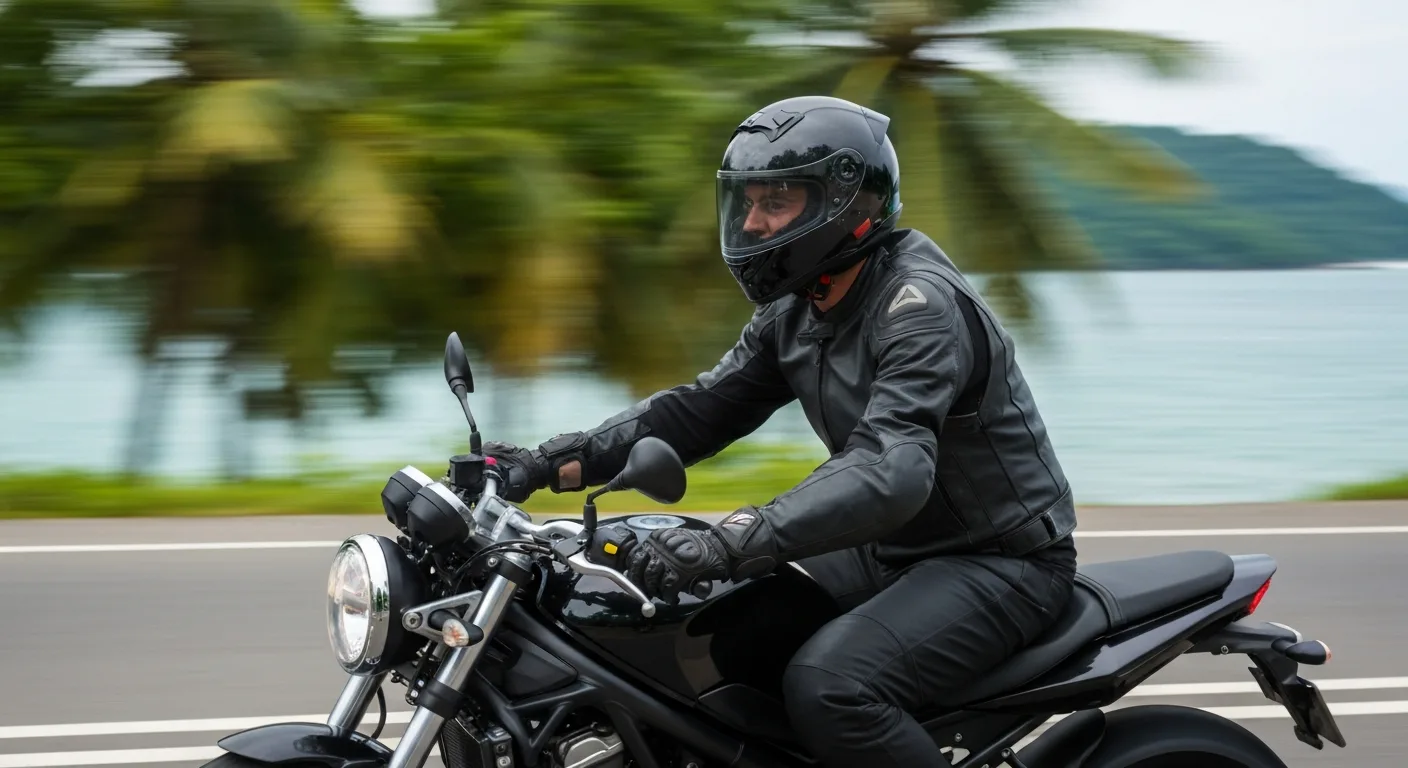
Stay safe on Phuket's roads with these crucial safety guidelines. From traffic rules to weather conditions, learn everything you need to know before you ride.
Riding a motorcycle in Phuket can be an incredible experience, but it demands more awareness than riding back home. Thai traffic patterns differ significantly from Western countries: traffic drives on the left, scooters filter everywhere, and the monsoon can turn a dry road slick in minutes. This guide covers the local road rules, gear and wet-weather habits that keep you safe on the island.
Key Takeaways
Motorcycle Safety in Phuket: Understanding Local Traffic
The biggest adjustment for most visitors riding in Phuket is that Thais drive on the left side of the road. If you're from a right-hand-traffic country, your instincts at junctions and roundabouts will be wrong for the first few days — so consciously double-check before every turn.
Beyond the side of the road, traffic here flows differently. Scooters use the shoulder, vehicles pull out from sois without a full stop, and a flash of headlights usually means "I'm coming through," not "after you." Be prepared for unexpected maneuvers from other vehicles, keep a generous following distance, and never assume another driver has seen you. Ride as if you're invisible and you'll anticipate most problems before they happen.
High-Risk Zones on the Island
Patong's hills, the Karon viewpoint curves and the busy Chalong Circle demand extra caution, especially at night. If you're new to the island, build up gradually — our first-time rider's guide to Thailand explains how to ease in safely.
Essential Safety Gear for Riding in Phuket
Wearing proper safety gear is non-negotiable, and it starts with the helmet. A quality helmet is legally required in Thailand and could genuinely save your life — motorcycle accidents are unfortunately common here, and most serious injuries involve unprotected heads. Every PMR rental includes two free helmets, so rider and passenger are always covered; make sure yours fits snugly and clips securely.
Beyond helmets, dress for the ride, not the beach:
A phone holder (included free with PMR bikes) means you can follow navigation without the deadly habit of riding one-handed with a phone.
Riding in Phuket's Rain and Monsoon Season
Weather conditions in Phuket can change rapidly, especially during the monsoon season from May to October, when heavy afternoon downpours arrive with little warning. Wet roads here are more treacherous than they look: the first minutes of rain lift oil and rubber residue to the surface, particularly at intersections where vehicles idle.
When you're caught in rain:
Always check the weather forecast before planning long rides, and in the green season try to do your big riding in the morning, before the typical afternoon storms.
Ride Sober and Stay Legal
Never ride under the influence of alcohol — it's the leading factor in serious tourist motorbike accidents, and police run night-time checkpoints across the island. Stay legal on paper too: Thai law requires a motorcycle licence, and foreign visitors need an International Driving Permit alongside their home licence. Carry both, wear your helmet, and checkpoint stops become a 30-second formality.
Choosing a well-maintained bike matters as much as how you ride it. Modern scooters with ABS-equipped options, fresh tyres and serviced brakes — like the Honda PCX 160 and the rest of our fleet — are simply safer machines, and PMR backs every rental with 24/7 roadside assistance.
Frequently Asked Questions
Is it safe to ride a scooter in Phuket?
Yes, if you ride defensively. Wear a helmet and proper gear, keep your speed moderate, assume other drivers haven't seen you, and avoid riding at night in entertainment areas — most accidents involve speed, alcohol or no protective gear.
Do I really need a helmet in Phuket?
Yes — helmets are mandatory by Thai law for both rider and passenger, and police fine violations on the spot. More importantly, a helmet is the difference between a scraped bike and a life-changing head injury.
What should I do if I get caught in the rain?
Slow down, keep your braking and throttle inputs smooth, and give extra room at intersections where oil makes the surface slick. If the downpour gets heavy, pull over under cover — most Phuket storms pass within half an hour.
When is the riskiest time to ride in Phuket?
The monsoon months of May to October bring slippery afternoon rain, and night riding is riskier year-round due to reduced visibility and drunk drivers. Morning hours in the dry season offer the safest conditions.
What licence do I need to ride legally in Phuket?
You need a motorcycle licence from your home country plus an International Driving Permit. Riding without them risks fines at the island's frequent police checkpoints.
Ready to ride safely? Rent a scooter in Phuket from PMR — every bike comes with two free helmets, a phone holder and 24/7 roadside assistance, with free hotel delivery on 3+ day rentals. Booking takes one WhatsApp message.
Frequently Asked Questions
Ready to Start Your Adventure?
Message us on WhatsApp to reserve your motorbike — pay at pickup, cash or card.
Share this post
About Admin
Expert in motorcycle travel and Phuket exploration. Passionate about sharing riding experiences and helping travelers discover the best of Thailand on two wheels.