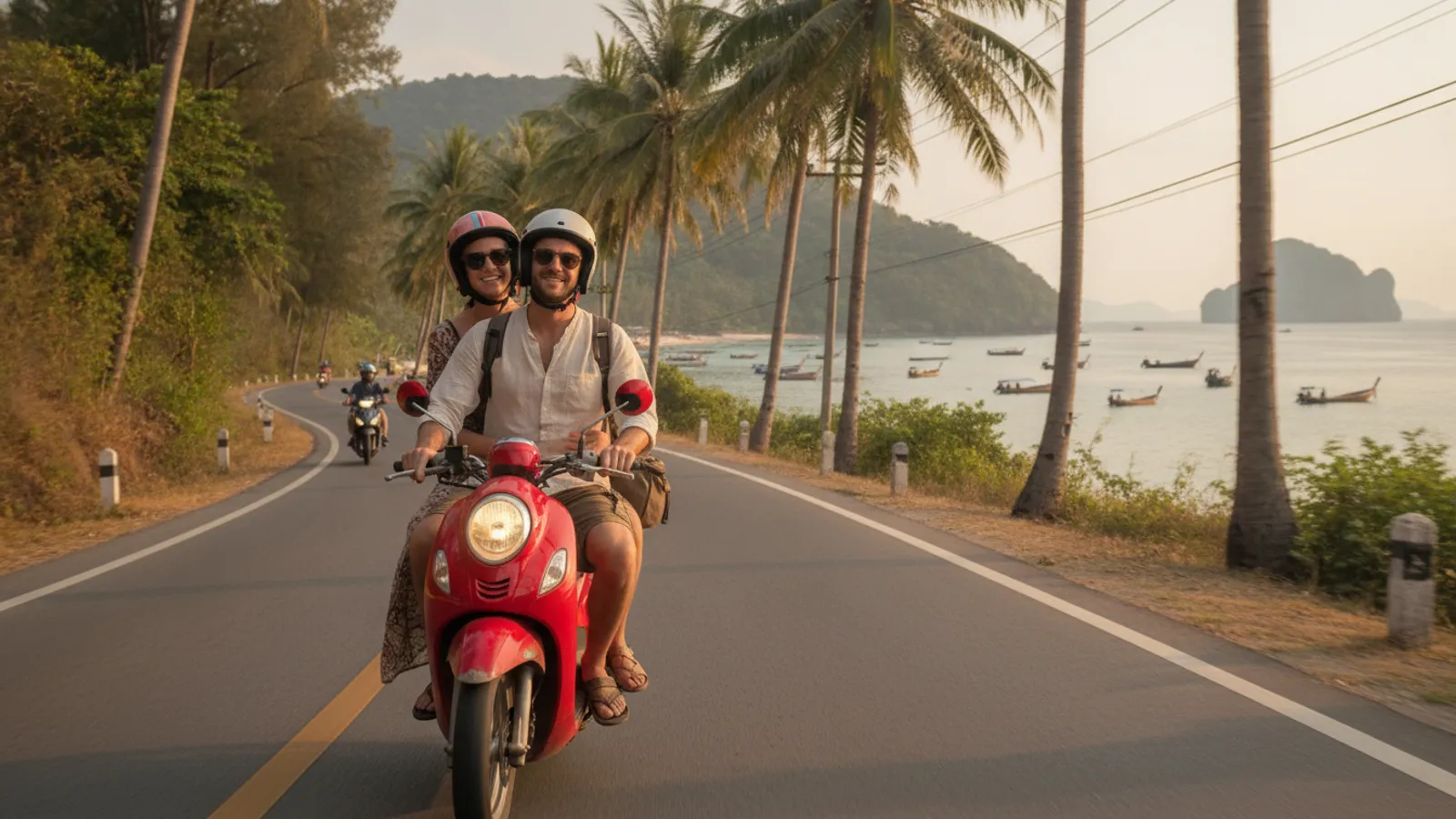
Complete beginner's guide to motorcycle riding in Thailand. Learn about licensing requirements, road conditions, and cultural considerations for a safe and enjoyable experience.
If this is your first time riding a motorcycle in Thailand, you're in for a genuine adventure — but proper preparation makes the difference between the best part of your trip and a costly mistake. This guide covers the licence you legally need, how Thai traffic culture actually works, and a simple plan for building confidence on the road, using Phuket as your starting point.
Key Takeaways
First Time Riding in Thailand: Licences and Documents
First and foremost, the legal side. To ride in Thailand you need an International Driving Permit (IDP) along with your home country licence — and the IDP must carry a motorcycle endorsement, which means you need a motorcycle licence at home too. A car licence alone doesn't cover a scooter.
Police checkpoints are common in Phuket, particularly on the main north–south routes and around tourist areas. Riding without proper documentation can result in fines of up to 1,000 baht, and being stopped repeatedly gets old fast. Keep your licence, IDP and a copy of your passport with you whenever you ride.
One honest warning: some rental shops don't verify documentation thoroughly. Don't let that lull you into a false sense of security — the shop handing you keys doesn't make you legal on the road, and the fine (plus any consequences after an accident) lands on you, not them.
Riding in Thailand for the First Time: Understanding Traffic Culture
Understanding Thai traffic culture is the biggest mental adjustment for first-timers. Traffic flow here is more fluid and less rigid than in Western countries. Motorcycles routinely use the shoulder of the road, especially during congested periods, and it's completely normal to see bikes moving between lanes of slow traffic.
While this might look chaotic at first, there's actually an unspoken order to it:
Helmets are mandatory for rider and passenger under Thai law — no exceptions, even for a two-minute ride to the shop. For a deeper dive into gear and wet-season riding, read our motorcycle safety tips for Phuket.
Build Confidence with Short Rides First
Start with short, simple rides to build confidence before attempting longer journeys. Take a few practice laps around your hotel or accommodation area to get comfortable with the bike's throttle, brakes and balance before venturing onto busier roads. Quiet areas like Rawai, Mai Khao or the east coast back roads are far more forgiving than Patong's hills.
Progress in stages: a coffee run on day one, a beach hop on day two, then a longer outing like our top 10 scenic motorcycle routes in Phuket once the bike feels like an extension of you. And remember — there's no shame in pulling over and walking your bike through a particularly hectic intersection if you feel uncomfortable. Locals would rather see a careful farang than a crashed one.
Choosing Your First Bike
For a first-timer, an automatic scooter is the only sensible choice — no clutch, no gears, just throttle and brakes. A light, forgiving Honda Click 125 is perfect for learning, while the slightly larger Honda PCX 160 adds stability if you'll carry a passenger. PMR rents Honda and Yamaha automatics from ฿250/day on weekly rates, with two helmets and a phone holder included free and 24/7 roadside assistance if anything goes wrong.
Frequently Asked Questions
Do I need a licence to rent a scooter in Thailand?
Legally, yes — you need a motorcycle licence from your home country plus an International Driving Permit with a motorcycle endorsement. Some shops rent without checking, but you remain responsible at police checkpoints, where fines run up to 1,000 baht.
Is riding in Thailand hard for beginners?
The bikes themselves are easy — automatic scooters have no gears — but the traffic culture takes adjustment. Start with short rides in quiet areas, stay predictable, and most riders feel comfortable within two or three days.
Which side of the road does Thailand drive on?
Thailand drives on the left, like the UK and Australia. If you're from a right-hand-traffic country, be extra deliberate at junctions and roundabouts for your first few days.
What happens if police stop me without a licence?
Expect a fine of up to 1,000 baht, payable at the police station. Checkpoints are common on Phuket's main roads, so carrying your licence, IDP and passport copy makes stops a quick formality.
Should I practise before riding in traffic?
Yes — take a few slow laps around your accommodation first to learn the throttle and brakes. Build up gradually from quiet sois to bigger roads, and walk the bike through any intersection that feels beyond you.
When you're ready for your first Thai riding adventure, rent a scooter in Phuket from PMR — free hotel delivery anywhere on the island with 3+ day rentals, easy WhatsApp booking, and pay at pickup by cash or card.
Frequently Asked Questions
Ready to Start Your Adventure?
Message us on WhatsApp to reserve your motorbike — pay at pickup, cash or card.
Share this post
About Admin
Expert in motorcycle travel and Phuket exploration. Passionate about sharing riding experiences and helping travelers discover the best of Thailand on two wheels.