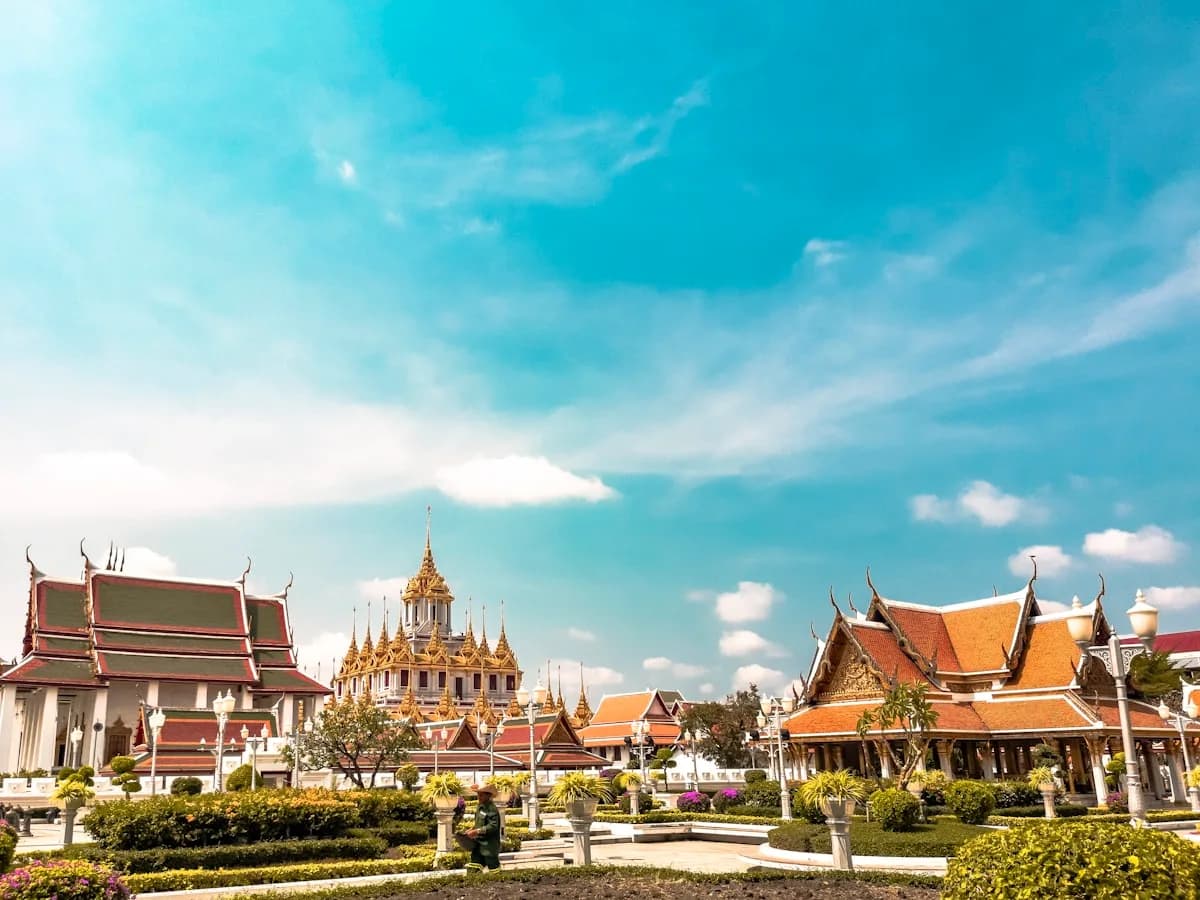
Go beyond the Instagram-famous Thalang Road and discover Phuket Old Town's secret heritage on a motorbike. Hidden shophouses, forgotten shrines, ghost-quiet alleys, and the architectural story of the island's remarkable multicultural past.
Phuket's Secret Heritage Hunt: A Motorbike Guide to Hidden Sino-Portuguese Architecture and Quiet Alleys
Most visitors to Phuket Old Town do the same walk. They start at the Dibuk Road end of Thalang Road, photograph the colourful shophouse facades, eat at one of the well-reviewed restaurants, browse the Sunday Walking Street if they time it right, and leave satisfied that they have experienced the town's famous Sino-Portuguese heritage. And they have, in a sense — but they have experienced its most curated, most photographed, most tourist-facing layer. The deeper Phuket Old Town, the one that holds the authentic architectural fabric of a genuinely remarkable multicultural history, is threaded through a network of back streets, alleyways, and satellite neighbourhoods that require either a very long walk or — far better — a motorbike to explore properly.
This guide is designed for riders who want to go beyond the obvious and encounter Phuket's heritage architecture as a living urban texture rather than a set of Instagram backdrops. It covers not just the well-known streets but the hidden lanes, the forgotten courtyards, the crumbling mansions on the outskirts of the old quarter, and the satellite villages where Sino-Portuguese building traditions survived long after the tourist-facing preservation efforts of the town centre changed the character of the main streets.
Understanding Phuket's Extraordinary Architectural Heritage
To fully appreciate what you are looking at when you explore Phuket Old Town, it helps to understand how the architecture came to exist. The Sino-Portuguese style — formally known in Thailand as "Chinpeng" architecture — emerged in Phuket (then called Thalang) during the 19th century tin mining boom, when the island became one of the most economically significant places in the entire Malay Peninsula. Chinese migrants, primarily from Hokkien-speaking regions of Fujian Province, arrived in enormous numbers to work the tin mines and establish trading businesses. They brought with them a building tradition that blended southern Chinese domestic architecture — the long shophouse format with living quarters above and commercial space below, the ornate facade detailing, the courtyard orientation — with the Portuguese colonial architecture they encountered in Malacca and Penang during their journeys through the Straits settlements.
The result is a building style that is genuinely unique in the world: five-foot covered walkways (known locally as "five-foot ways") that create a continuous shaded pedestrian corridor along entire blocks, elaborately detailed plaster facades mixing Chinese motifs with European pilasters and arches, internal courtyards that regulate air temperature without mechanical cooling, and a building material palette centred on local brick rendered in plaster and painted in the pastel tones — ochre, sage green, pale blue, terracotta — that have become synonymous with the style.
At its peak, the Sino-Portuguese district covered several square kilometres. Today, the preserved and restored section along Thalang, Dibuk, Krabi, Phang Nga, and Yaowarat Roads represents perhaps 20 to 30 percent of the original building stock. The remainder — hundreds of shophouses and several substantial mansions — survive in various states of decay, adaptation, and abandonment across the surrounding streets. These are the buildings that this guide seeks out.
The Route: Starting Where the Tourist Maps End
Ranong Road — The Commercial Spine Nobody Visits
While Thalang Road is Phuket Old Town's photogenic showpiece, Ranong Road running parallel one block to the north is its working commercial counterpart — and architecturally, it is equally extraordinary. The shophouses here have not been subjected to the cosmetic restoration that gives Thalang Road its candy-coloured appearance. Instead, they survive in their unrestored state: original plaster in various stages of weathering, original timber shutters either intact or replaced with aluminium louvres, original tilework on the floor of the five-foot walkways occasionally still visible beneath decades of accumulated patching. The businesses operating from these buildings are unglamorous and genuine: hardware shops, wholesale fabric merchants, traditional Chinese medicine dispensaries, motorcycle repair workshops, wet goods stores.
Riding slowly along Ranong Road on a scooter — moving at the same pace as the delivery tricycles and food carts that share the narrow space — you encounter the Sino-Portuguese heritage as architecture in actual use rather than architecture preserved for display. The facades here are not maintained for aesthetics; they are maintained (or not) according to the practical needs of the families and businesses that have occupied them for three and four generations. This functional authenticity is, architecturally speaking, more revealing than any number of freshly painted Instagram walls.
Park your scooter in the small public car park at the Ranong Road / Rassada Road intersection and walk the full 600-metre length of the commercial block on foot, then return to your bike and continue the route by scooter.
Soi Romanee — Famous but Best Experienced Early
Soi Romanee is not a secret — it appears on every tourist map of Phuket Old Town and has been photographed millions of times. But the experience of riding to it at 7:00 AM on a weekday morning, when the lane is empty of tour groups and the early light casts long shadows through the five-foot walkways, is entirely different from the midday tourist rush. At this hour, the lane belongs to residents: elderly women sweeping the tiles in front of their shophouses, Chinese shrine keepers lighting the morning incense, cats patrolling the rooftop ledges. The colours — deep Chinese red, burnt orange, mustard yellow — are vivid in the morning light in a way that the flat midday sun completely obscures.
There is no motorbike parking on Soi Romanee itself, which is pedestrian-only. Park on Phang Nga Road at either end and walk through. But reaching Soi Romanee by scooter at dawn, before the tour buses have disgorged their passengers onto Thalang Road, is what makes this famous lane feel like a discovery rather than a tick-box.
Krabi Road and the Forgotten Mansions
Krabi Road runs from the edge of the Old Town district southward toward Saphan Hin Park, and along this stretch — particularly in the section between Yaowarat Road and Phuket Road — the building stock transitions from small shophouses to large standalone mansions that represent the domestic architecture of Phuket's wealthiest tin mining families. Several of these mansions are in an advanced state of decay, their elaborate facades crumbling into the overgrown lots around them, their shuttered windows giving them the look of buildings that have been waiting for something for a very long time.
One particular mansion, set back from the road behind an iron fence approximately 200 metres south of the Krabi Road / Yaowarat Road intersection, is one of the most architecturally significant buildings in Phuket — and is almost entirely unknown to tourists. Its two-storey facade combines a Chinese-style projecting roof with an elaborately detailed Portuguese-influenced arcade at ground level, and the original painted plaster murals depicting mythological scenes are still partially visible on the interior walls visible through the gate. The building is privately owned and not open to the public, but it can be examined closely through the fence. Ride slowly past; this is not a building to experience from the window of a moving taxi.
The Back Streets of Dibuk — Courtyards and Clan Houses
The streets parallel to and behind Dibuk Road — specifically the small lanes designated Soi 1 through Soi 6 on the local maps — contain some of the best-preserved examples of the courtyard house typology that distinguishes Phuket's Chinese heritage from the more purely commercial shophouse blocks. These courtyard houses, known in Hokkien as "san he yuan" (three-sided courtyard), were the domestic residences of merchant families who wanted separation between their commercial premises on the main road and their private family quarters behind. Several of these courtyards survive intact, though many are now used as workshops, parking areas, or storage rather than residences.
A scooter is invaluable for navigating these lanes, which are too narrow and too numerous to explore efficiently on foot but equally too narrow for cars or taxis to follow easily. The sense of entering a private world — a network of alleys and courtyards invisible from and unknown to the main street tourist route — is one of the distinctive pleasures of motorbike heritage exploration.
Bang Niao Temple District — The Living Religious Landscape
The area surrounding Jui Tui Shrine on Ranong Road and Bang Niew Temple two blocks to the east constitutes the spiritual heart of Phuket's Hokkien Chinese community, and the architecture here — shrine buildings, spirit houses, clan association halls, and the domestic buildings that cluster around religious sites — tells a parallel story to the commercial Sino-Portuguese heritage of the main streets. The shrine buildings themselves are outstanding examples of traditional southern Chinese religious architecture: curved rooflines with elaborate ceramic figure decorations, red and gold interiors thick with incense smoke, courtyards paved in traditional geometric tile patterns.
The residential streets surrounding these temples, within a two to three block radius, are among the quietest and most authentic in the entire Old Town. The families who live here have been connected to these shrines for multiple generations; the neighbourhood has changed far less than the tourist-facing streets to the south. A slow scooter ride through these streets — ideally combined with a stop to respectfully observe the morning prayer rituals at one of the shrines — provides an entirely different perspective on Phuket's heritage than the cafe and boutique experience of Thalang Road.
Satellite Heritage: Beyond the Old Town Core
Ban Tha Rua — A Tin Mining Village Frozen in Time
Located approximately four kilometres north of Phuket Town on Route 402, the village of Tha Rua is one of the most atmospheric and least visited heritage sites on the island. Founded during the tin mining era as a residential quarter for mine workers and small merchants, the village retains a remarkable concentration of vernacular Sino-Portuguese buildings — smaller and less elaborate than the mansions of the Old Town, but no less authentic — along its main street and several side lanes. There are no tourist facilities here: no cafes, no art galleries, no boutique shops. There is a traditional market in the morning, a Chinese shrine at the centre of the village, and row after row of shophouses occupied by the families who have lived in them since they were built.
A scooter is the ideal way to visit Tha Rua: the journey from Phuket Town takes 15 minutes on Route 402, the village is compact enough to explore in 45 minutes, and you can combine it with a continuation northward to the Thalang National Museum and the site of the historic Battle of Thalang, making a full half-day heritage circuit. The village sees virtually no foreign tourists, which makes the experience of riding through it genuinely exploratory.
Practical Heritage Riding Tips
The back streets of Phuket Old Town are genuinely narrow — some lanes are barely three metres wide — which requires specific riding techniques and etiquette. Ride at walking pace through the residential lanes, giving way to pedestrians, cyclists, and residents moving between buildings. Shut off your engine if you stop for more than a minute; the noise in a confined alley is considerable. Remove your helmet when entering temple or shrine courtyards as a mark of respect. Ask permission before photographing people in their homes or workplaces.
The best time for heritage riding in Phuket Old Town is early morning between 6:30 and 9:30 AM, when the light is excellent for photography, the temperatures are comfortable, the streets are quiet enough to move slowly without impeding traffic, and the local community is going about its morning routines in a way that reveals the living culture behind the architecture. By 10:30 AM the tour groups arrive in numbers and the main streets become significantly crowded.
For navigation, download the "Phuket Old Town" offline layer on Google Maps and supplement it with the free heritage map available from the Phuket Old Town Foundation office on Dibuk Road. The Foundation map identifies 46 heritage buildings with brief historical notes and is the most useful single document available for architectural heritage exploration in the town.
Choose PMR for Your Heritage Riding Experience
PMR Phuket Motorbike Rental has been a part of Phuket Old Town since 2014. Our main rental location on Rassada Road places you at the edge of the heritage district, within riding distance of every building and lane described in this guide. Our team members live in the Old Town and surrounding neighbourhoods, and we are happy to share specific recommendations based on your interests — whether you want to focus on the architectural heritage, the living street culture, the culinary traditions, or the religious landscape.
We recommend the Honda PCX 150 or Honda Click 125 for Old Town exploration: both are narrow enough for the tightest lanes, quiet enough not to disturb residents, and comfortable for the slow-speed, stop-start riding that heritage exploration requires. Both also have convenient underseat storage for a camera bag, sketchbook, or heritage guide.
Book your rental with PMR today and we will provide you with a printed heritage route map, a list of the morning markets and shrine prayer times to time your visit around, and personal recommendations from staff members who know this neighbourhood from the inside. Phuket's greatest architectural treasure is right here, waiting to be explored at your own pace, on your own schedule, on a bike from PMR.
Ready to Start Your Adventure?
Message us on WhatsApp to reserve your motorbike — pay at pickup, cash or card.
Share this post
About PMR Phuket Motorbike Rental
Expert in motorcycle travel and Phuket exploration. Passionate about sharing riding experiences and helping travelers discover the best of Thailand on two wheels.